


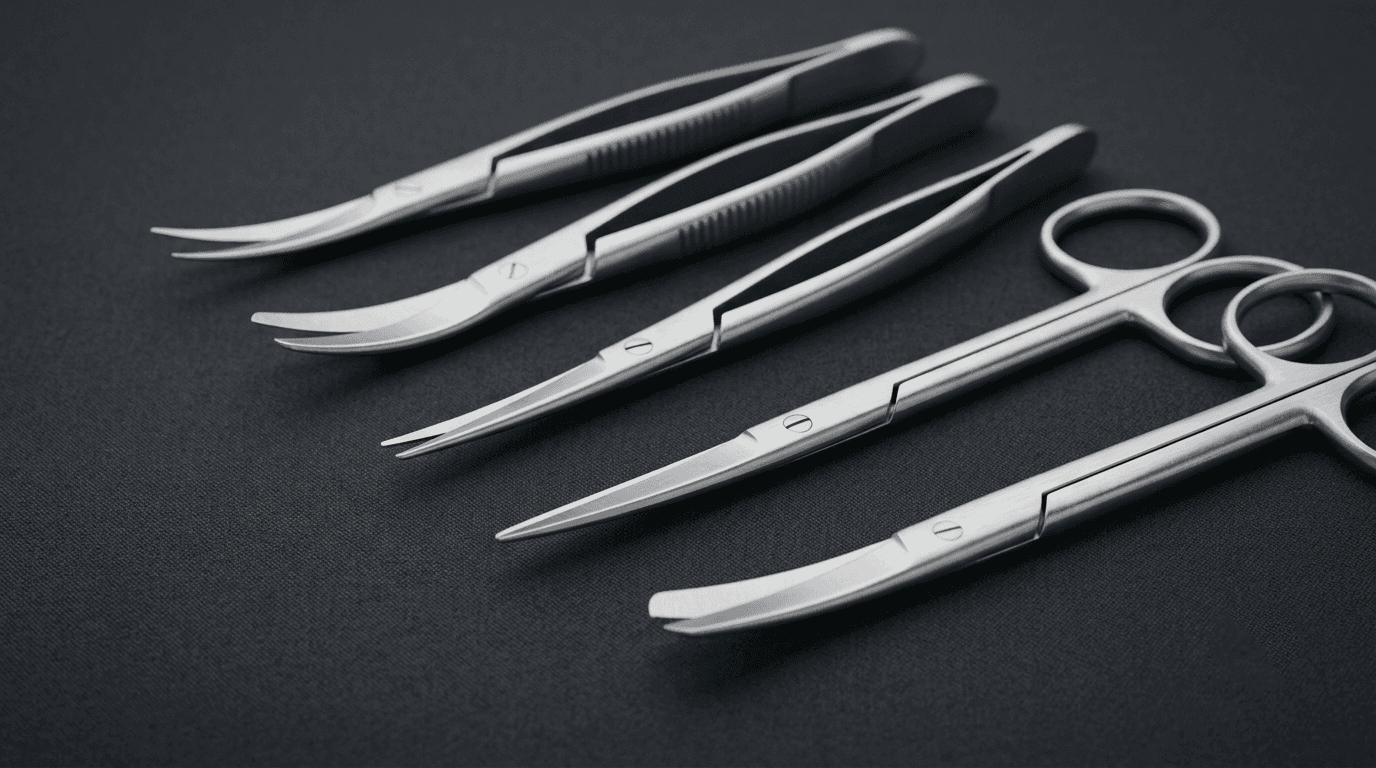
Understanding Ophthalmic Surgical Scissors: Types and Applications
Ophthalmic surgical scissors are precision instruments designed for controlled cutting, dissection, tissue manipulation, and suture handling during eye surgery. Because ophthalmic procedures involve delicate anatomical structures and restricted surgical spaces, the design and configuration of the scissors can be important considerations when selecting surgical instruments.
Different types of ophthalmic surgical scissors are designed for different applications. Corneal scissors, Iris scissors, Vannas scissors, Westcott scissors, Tenotomy scissors, and Enucleation scissors each serve distinct surgical requirements.
For hospitals, ophthalmology clinics, surgical centres, distributors, importers, and healthcare procurement teams, understanding these differences can help simplify the selection of appropriate ophthalmic scissors.
Medsprings provides a focused range of ophthalmic surgical scissors within its broader reusable ophthalmic surgical instrument portfolio.
What Are Ophthalmic Surgical Scissors?
Ophthalmic surgical scissors are specialised instruments used for cutting and dissecting delicate ocular tissues, membranes, and surgical materials.
Compared with general-purpose surgical scissors, ophthalmic scissors are designed around the precision requirements of eye surgery. Differences in blade length, tip configuration, curvature, spring action, and overall instrument profile allow different scissors to perform specific surgical tasks.
Depending on the design, ophthalmic scissors can be used for:
-
Corneal sectioning
-
Iris and anterior-segment tissue dissection
-
Conjunctival dissection
-
Extraocular muscle dissection
-
Fine membrane cutting
-
Microsuture cutting
-
Enucleation procedures
-
Other specialised ophthalmic surgical applications
The appropriate instrument depends on the procedure, tissue involved, surgical approach, and surgeon preference.
Types of Ophthalmic Surgical Scissors
There is no single pair of ophthalmic scissors suitable for every procedure. Different designs provide different levels of access, cutting control, and tissue handling.
Medsprings' current portfolio includes Corneal Scissors, Iris Scissors, Vannas Scissors, Westcott Scissors, Tenotomy Scissors, Conjunctival Scissors, and Enucleation Scissors.
1. Corneal Scissors
Corneal scissors are designed for precise cutting and sectioning of corneal tissue.
Their fine blades and controlled cutting action can support applications involving corneal sectioning, keratoplasty-related procedures, and anterior-segment tissue dissection.
Medsprings' portfolio includes corneal scissors designed around precision cutting and minimal tissue distortion.
When selecting corneal scissors, consider:
-
Blade curvature
-
Blade profile
-
Tip configuration
-
Cutting length
-
Surgical application
-
Surgeon preference
For healthcare procurement teams, the appropriate configuration should be selected according to the intended clinical use.
2. Iris Scissors
Iris scissors are fine surgical scissors designed for delicate anterior-segment tissue manipulation.
They can be used for applications such as iris tissue dissection, iridectomy-related procedures, and fine tissue trimming.
Because the iris is a delicate ocular structure, controlled cutting and appropriate tip geometry are important considerations when selecting an iris scissors design.
Medsprings offers Iris Scissors in straight, curved, and micro-fine configurations.
3. Vannas Scissors
Vannas scissors are small, fine scissors commonly associated with delicate intraocular and anterior-segment microsurgical procedures.
Their compact working profile can provide the control required for fine tissue and membrane cutting.
Applications can include:
-
Fine anterior-segment dissection
-
Capsular membrane cutting
-
Iridectomy-related procedures
-
Microsurgical tissue trimming
Medsprings offers Vannas Scissors with straight, curved, and angled micro-fine blade configurations.
4. Westcott Scissors
Westcott scissors are versatile ophthalmic scissors used for delicate dissection and cutting applications.
They are commonly associated with conjunctival dissection, extraocular muscle procedures, and fine suture cutting.
Medsprings' Westcott range includes configurations designed for tenotomy, conjunctival dissection, and microsuture cutting.
The spring-action design can provide controlled cutting movement during delicate procedures.
For more information, explore the Westcott Scissors product range.
5. Tenotomy Scissors
Tenotomy scissors are specialised scissors designed for delicate dissection around extraocular muscles and tendon structures.
They can be used in procedures involving strabismus correction, oculoplastic applications, and extraocular muscle dissection.
Medsprings' Tenotomy Scissors feature slender profiles and tapered blade configurations designed for controlled access to narrow anatomical planes.
The range includes straight and curved configurations, allowing selection according to the surgical approach.
Explore Tenotomy Scissors for more information.
6. Conjunctival Scissors
Conjunctival scissors are designed for delicate cutting and dissection of conjunctival tissue.
They can support applications such as conjunctival dissection, flap elevation, and ocular surface procedures.
Medsprings offers straight, curved, and blunt-tipped configurations within its Conjunctival Scissors range.
When selecting conjunctival scissors, the required blade profile and tip configuration should be considered alongside the intended procedure.
7. Enucleation Scissors
Enucleation scissors are specialised instruments used during enucleation and related procedures requiring optic nerve transection and globe removal.
Compared with fine microsurgical scissors, these instruments require a different design approach and greater mechanical leverage.
Medsprings' Enucleation Scissors feature curved blades and blunt safety tips for their intended surgical applications.
How to Choose the Right Ophthalmic Scissors
Selecting ophthalmic scissors should begin with the intended surgical application.
1. Identify the Procedure
First determine which procedure the instrument will support.
For example:
-
Corneal procedures may require corneal scissors
-
Anterior-segment procedures may require Iris or Vannas scissors
-
Strabismus procedures may require Tenotomy or Westcott scissors
-
Conjunctival procedures may require specialised conjunctival scissors
-
Enucleation procedures require purpose-specific enucleation scissors
Matching the instrument to the procedure is the first step in selecting an appropriate configuration.
2. Consider the Tissue or Material Being Cut
Different scissors are designed for different cutting requirements.
The intended material may include:
-
Corneal tissue
-
Iris tissue
-
Conjunctiva
-
Extraocular muscle
-
Fine membranes
-
Microsutures
-
Other ophthalmic surgical materials
The blade design should correspond to the required cutting task.
3. Consider Straight vs Curved Blades
Ophthalmic scissors are available in different blade geometries.
Straight blades can provide a direct cutting path, while curved blades can provide improved access around anatomical structures or within confined surgical areas.
The appropriate choice depends on the surgical approach and surgeon preference.
4. Consider Tip Configuration
Tip design is particularly important for delicate ophthalmic procedures.
Depending on the instrument, available configurations may include:
-
Sharp tips
-
Blunt safety tips
-
Tapered tips
-
Micro-fine tips
-
Specialised cutting profiles
The tip should be appropriate for the tissue and surgical application.
5. Consider Spring Action and Handling
Many ophthalmic scissors use spring-action or specialised handle designs to provide controlled cutting movement.
Handling characteristics can influence:
-
Tactile feedback
-
Cutting control
-
Hand positioning
-
Access to confined surgical spaces
-
Surgeon comfort
These considerations can be particularly relevant during procedures involving prolonged microsurgical manipulation.
6. Consider Material and Instrument Construction
Material can also be an important procurement consideration for reusable ophthalmic instruments.
Medsprings' current scissors portfolio includes surgical-grade stainless steel and lightweight titanium configurations.
Healthcare facilities should evaluate the material and instrument construction according to their clinical requirements and validated instrument-processing procedures.
Ophthalmic Scissors for Reusable Surgical Instrument Sets
Ophthalmic scissors are rarely used as an isolated product category.
Depending on the procedure, surgical teams may also require forceps, needle holders, hooks, cannulas, measuring instruments, and other specialised ophthalmic instruments.
Medsprings' Reusable Surgical Instruments portfolio includes multiple instrument groups supporting ophthalmic surgical requirements.
This allows healthcare organisations and procurement teams to explore complementary instruments within a broader ophthalmic supply portfolio.
Ophthalmic Scissors for Hospitals and Eye Clinics
Hospitals and ophthalmology clinics may require different scissors depending on the procedures performed.
A cataract-focused facility may have greater requirements for fine anterior-segment scissors, while a centre performing strabismus or oculoplastic procedures may require Tenotomy and Westcott patterns.
When planning procurement, healthcare teams should consider:
-
Procedures performed
-
Preferred instrument patterns
-
Number of surgical sets
-
Replacement requirements
-
Reusable instrument workflows
-
Product specifications
-
Procurement and supply requirements
This approach helps ensure that the selected instruments correspond to actual clinical requirements.
Ophthalmic Scissors for Distributors and Importers
For distributors and importers, a broader ophthalmic scissors portfolio can be particularly valuable.
Different hospitals and surgeons may prefer different instrument patterns, making it useful to have access to multiple configurations.
A portfolio can include:
-
Corneal Scissors
-
Iris Scissors
-
Vannas Scissors
-
Westcott Scissors
-
Tenotomy Scissors
-
Conjunctival Scissors
-
Enucleation Scissors
Medsprings provides these categories through its dedicated Ophthalmic Scissors portfolio, supporting international healthcare procurement and distribution requirements.
What to Look for in an Ophthalmic Scissors Supplier
When evaluating an ophthalmic surgical scissors supplier, healthcare organisations should consider more than the individual product.
Important factors include:
-
Range of ophthalmic scissors
-
Procedure-specific configurations
-
Blade and tip options
-
Product specifications
-
Material options
-
Reusable instrument information
-
Product documentation
-
International supply support
-
Responsive procurement assistance
-
Availability of complementary ophthalmic instruments
A supplier with a specialised ophthalmic portfolio can make it easier to source related products through one supply relationship.
Medsprings Ophthalmic Scissors Portfolio
Medsprings provides a focused range of ophthalmic surgical scissors designed for different cutting and dissection requirements.
The current portfolio includes:
Together, these products provide different configurations for ophthalmic cutting, dissection, tissue manipulation, and microsurgical requirements.
A Broader Ophthalmic Supply Portfolio
Ophthalmic scissors are one part of the wider Medsprings portfolio.
Healthcare organisations, distributors, and procurement professionals can also explore:
This broader product structure allows Medsprings to support healthcare organisations as an ophthalmic supply partner and solution provider, rather than focusing on a single instrument category.
Frequently Asked Questions About Ophthalmic Surgical Scissors
What are ophthalmic surgical scissors used for?
Ophthalmic surgical scissors are specialised instruments used for controlled cutting and dissection during eye surgery. Depending on the design, they can be used for corneal tissue, iris tissue, conjunctiva, extraocular muscles, fine membranes, microsutures, and other surgical applications.
What are the different types of ophthalmic scissors?
Common types include Corneal Scissors, Iris Scissors, Vannas Scissors, Westcott Scissors, Tenotomy Scissors, Conjunctival Scissors, and Enucleation Scissors.
What are Vannas scissors used for?
Vannas scissors are fine microsurgical scissors used for delicate intraocular and anterior-segment procedures, including fine membrane cutting and tissue dissection.
What are Westcott scissors used for?
Westcott scissors can be used for delicate conjunctival dissection, extraocular muscle procedures, and fine suture cutting. Different Westcott configurations are available for specific surgical applications.
What are Tenotomy scissors used for?
Tenotomy scissors are designed for delicate dissection around extraocular muscles and tendon structures. They can be used in strabismus and other ophthalmic procedures requiring controlled tissue dissection.
How do I choose ophthalmic surgical scissors?
Start by identifying the procedure and tissue being cut. Then consider blade curvature, tip configuration, blade profile, instrument length, handling characteristics, material, and the surgeon's preferred technique.
Explore Ophthalmic Surgical Scissors from Medsprings
Selecting the right ophthalmic surgical scissors begins with understanding the surgical application and the specific cutting or dissection requirement.
Medsprings provides a focused portfolio of ophthalmic scissors for hospitals, ophthalmology clinics, surgical centres, distributors, importers, and healthcare procurement professionals.
Explore Ophthalmic Surgical Scissors, explore the wider Reusable Surgical Instruments portfolio, or contact Medsprings to discuss your product and supply requirements.