


Ophthalmic Forceps: Types, Uses and Selection Guide
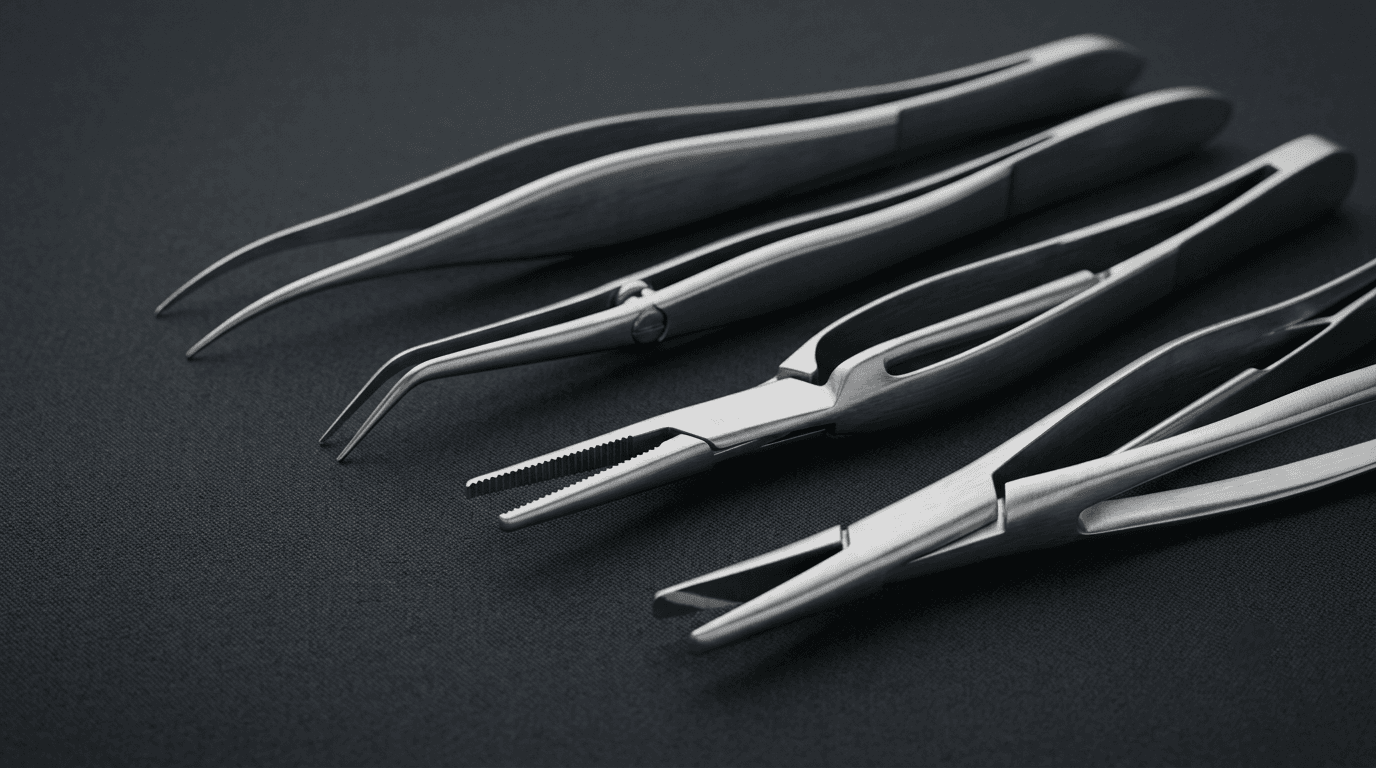
Ophthalmic forceps are precision surgical instruments designed for delicate gripping, fixation, tissue handling, suturing, and manipulation during eye surgery. Because ophthalmic procedures involve small anatomical structures and highly controlled movements, the design of the forceps—including the tip, jaw, teeth, handle, angle, and material—can be important to its intended application.
For ophthalmologists, hospitals, eye surgery centres, distributors, and healthcare procurement teams, selecting the right ophthalmic forceps starts with understanding the surgical task the instrument needs to perform.
Medsprings provides a specialised range of ophthalmic surgical forceps and reusable surgical instruments for different ophthalmic applications as part of its wider surgical instruments portfolio.
What Are Ophthalmic Forceps?
Ophthalmic forceps are specialised handheld instruments used to grasp, hold, stabilise, manipulate, or position delicate tissues and materials during ophthalmic procedures.
Unlike general surgical forceps, ophthalmic forceps are designed for the precision requirements of microsurgery. Different designs may feature fine tips, toothed or non-toothed jaws, specialised tying platforms, angled profiles, and spring-action handles.
Depending on their design, ophthalmic forceps may support applications such as:
-
Delicate ocular tissue handling
-
Globe fixation and stabilisation
-
Corneal and conjunctival manipulation
-
Suture handling and knot tying
-
Iris manipulation
-
Capsulorhexis-related procedures
-
Muscle handling
-
Anterior-segment procedures
-
Vitreoretinal procedures
The correct instrument depends on the procedure, tissue being handled, required grip, access angle, and surgeon preference.
Explore the complete Ophthalmic Forceps range from Medsprings.
Types of Ophthalmic Forceps
There is no single ophthalmic forceps design suitable for every procedure. Different forceps are developed around specific surgical tasks.
The Medsprings portfolio includes multiple specialised configurations for tissue handling, fixation, tying, muscle control, and other ophthalmic applications.
1. Tissue and Fixation Forceps
Tissue and fixation forceps are designed to provide controlled grip and stabilisation during ophthalmic procedures.
Depending on their configuration, these instruments can support manipulation of delicate corneal and conjunctival tissues as well as fixation of the globe during surgery.
Medsprings' Tissue/Fixation Forceps portfolio includes recognised instrument patterns such as:
-
Colibri Forceps
-
Barraquer Forceps
-
Pierse Hoskin Forceps
-
Adson Forceps
-
Other specialised fixation patterns
Different patterns provide different jaw, tooth, and handling characteristics, making instrument selection dependent on the intended surgical application.
Explore Tissue/Fixation Forceps →
2. Tying Forceps
Tying forceps are precision instruments designed for manipulating fine sutures and assisting with knot tying during microsurgical procedures.
They are particularly relevant to anterior-segment, corneal, and cataract surgery where delicate suture manipulation may be required.
Medsprings offers different tying forceps configurations, including recognised patterns such as:
-
McPherson
-
Kelman-McPherson
-
Harms
-
Jaffe Tying Forceps
Straight, curved, and angled configurations allow surgeons to select an instrument according to the required access and technique.
The Medsprings range uses fine tying platforms designed for manipulation of fine ophthalmic sutures.
3. Fixation Forceps for Globe Stability
Controlled fixation can be important when stability is required during delicate ophthalmic manoeuvres.
Fixation forceps are designed to provide controlled grip while allowing the surgeon to stabilise ocular structures.
Instrument characteristics to consider include:
-
Tooth configuration
-
Jaw width
-
Tip alignment
-
Grip characteristics
-
Handle design
-
Instrument material
-
Intended tissue
Medsprings' fixation range includes configurations intended for corneal, conjunctival, muscle, and other specialised ophthalmic applications.
4. Muscle Forceps
Muscle forceps are designed for handling and controlling extraocular muscles during relevant ophthalmic procedures.
Because muscle manipulation requires controlled handling, the geometry and grip characteristics of the instrument should be suited to the intended surgical technique.
Medsprings includes Muscle Forceps within its reusable ophthalmic surgical instrument portfolio.
For procurement teams, muscle forceps should be evaluated according to their intended application, tip and jaw configuration, material, handling characteristics, and compatibility with the surgical team's requirements.
5. Specialised Microsurgical Forceps
Ophthalmic surgery can require highly specialised instruments for particular tissues, anatomical areas, or surgical techniques.
Depending on the application, specialised ophthalmic forceps may be designed for:
-
Capsular manipulation
-
Iris handling
-
Fine suture manipulation
-
Corneal procedures
-
Vitreoretinal procedures
-
Muscle handling
-
Tissue fixation
Rather than choosing an instrument based only on its general category, surgeons and procurement teams should evaluate the exact configuration and intended application.
How to Choose the Right Ophthalmic Forceps
Selecting the right ophthalmic surgical forceps involves more than choosing a familiar instrument name.
Several factors should be considered.
1. Start With the Surgical Application
First determine what the forceps needs to accomplish.
Is it required for:
-
Tissue handling?
-
Globe fixation?
-
Suture tying?
-
Muscle manipulation?
-
Corneal work?
-
Iris manipulation?
-
Anterior-segment surgery?
-
Posterior-segment surgery?
Identifying the application immediately narrows the range of suitable instruments.
2. Consider the Tip and Jaw Design
The working end is one of the most important differences between forceps.
Depending on the application, ophthalmic forceps may have:
-
Fine smooth tips
-
Serrated surfaces
-
Toothed jaws
-
Fine tying platforms
-
Straight jaws
-
Angled jaws
-
Curved configurations
A forceps intended for suture tying, for example, has different requirements from one intended for tissue fixation.
3. Toothed vs Non-Toothed Forceps
The presence and configuration of teeth influence the gripping characteristics of surgical forceps.
Toothed designs may be selected when secure tissue engagement is required, while non-toothed or smooth configurations may be more appropriate for other delicate manipulation tasks.
The decision should therefore be based on the tissue, surgical technique, and required degree of grip rather than simply choosing one configuration universally.
4. Consider Instrument Angle
Straight forceps are appropriate for many applications, but angled or curved configurations can provide improved access in particular surgical situations.
For example, Medsprings' tying forceps portfolio includes straight, curved, 45-degree, and 90-degree configurations across different instrument patterns.
The required angle should be selected according to the procedure and surgeon preference.
5. Evaluate Handle and Ergonomics
Ophthalmic procedures require controlled movements, often under magnification.
Handle design can therefore influence:
-
Tactile feedback
-
Control
-
Tip closure
-
Instrument stability
-
Surgeon comfort
Spring-action handles are commonly used in microsurgical ophthalmic forceps because they provide controlled opening and closing during delicate manipulation.
6. Consider Instrument Material
Reusable ophthalmic instruments require materials suited to precision use and repeated processing.
The current Medsprings Tissue/Fixation and Tying Forceps ranges include surgical stainless-steel and titanium configurations.
Material selection can influence factors such as weight, handling characteristics, corrosion resistance, and surgeon preference.
7. Consider Sterilisation and Reusability
When selecting reusable ophthalmic surgical instruments, hospitals and surgical centres should consider the required cleaning, sterilisation, inspection, and maintenance processes.
Reusable forceps should maintain appropriate jaw alignment, tip condition, and handling characteristics throughout their service life.
Healthcare facilities should always follow the applicable product instructions and their established sterilisation protocols.
Ophthalmic Forceps for Different Surgical Requirements
Different ophthalmic procedures can require different forceps configurations.
Cataract and Anterior-Segment Surgery
Fine tying and tissue-handling forceps may be required for suture manipulation and other delicate anterior-segment tasks.
Corneal Procedures
Corneal surgery can require specialised forceps for fine tissue handling, fixation, and suturing.
Strabismus and Muscle Procedures
Muscle forceps and appropriate fixation instruments can support controlled extraocular muscle handling.
Vitreoretinal Procedures
Posterior-segment surgery may require specialised microsurgical forceps designed for fine manipulation in confined surgical spaces.
This is why hospitals and surgical centres often require a portfolio of ophthalmic forceps rather than a single general-purpose instrument.
Ophthalmic Forceps for Hospitals and Eye Surgery Centres
For hospitals and ophthalmology centres, selecting reusable surgical instruments should be based on the procedures performed by the surgical team.
A facility performing multiple types of ophthalmic surgery may require a combination of:
-
Tissue forceps
-
Fixation forceps
-
Tying forceps
-
Muscle forceps
-
Iris forceps
-
Capsulorhexis forceps
-
Other specialised microsurgical forceps
Creating an instrument portfolio around actual surgical requirements can make procurement more focused and reduce unnecessary duplication.
What Should Distributors Consider When Sourcing Ophthalmic Forceps?
Medical distributors and importers have different considerations from individual surgical centres.
A distributor may need to provide several instrument patterns to meet the preferences of different surgeons and hospitals.
When evaluating an ophthalmic forceps supplier, consider:
-
Breadth of the instrument portfolio
-
Availability of specialised forceps
-
Instrument materials
-
Product specifications
-
Reusable instrument options
-
Technical and product information
-
International supply support
-
Responsiveness to enquiries
-
Availability of complementary ophthalmic instruments
A focused ophthalmic portfolio can make it easier for distributors to serve hospitals, clinics, surgical centres, and ophthalmologists with different procedural requirements.
Ophthalmic Forceps as Part of a Reusable Instrument Portfolio
Forceps are only one part of a complete ophthalmic surgical instrument setup.
Medsprings' Reusable Surgical Instruments portfolio brings together forceps, scissors, and other specialised instruments for ophthalmic and surgical applications.
Healthcare organisations can also explore the broader Surgical Instruments & Consumables portfolio for complementary clinical and operating-theatre products.
For organisations looking beyond surgical instruments, Medsprings also provides Ophthalmic Knives, Ophthalmic Viscosurgical Devices (OVDs), and Ophthalmic Equipment.
This allows hospitals, distributors, importers, and healthcare procurement teams to explore multiple ophthalmic requirements through a focused ophthalmic supply partner.
Choosing an Ophthalmic Forceps Supply Partner
The right supply relationship involves more than identifying an individual forceps.
Hospitals, distributors, importers, and procurement organisations should consider whether their supply partner can provide:
-
A specialised ophthalmic portfolio
-
Multiple forceps configurations
-
Clear product information
-
Complementary surgical instruments
-
International supply coordination
-
Responsive product support
-
Long-term supply relationships
Medsprings works with healthcare organisations and distribution partners as an ophthalmic supply partner and solution provider, offering access to specialised surgical instruments and a broader ophthalmic product portfolio.
Frequently Asked Questions About Ophthalmic Forceps
What are ophthalmic forceps used for?
Ophthalmic forceps are precision surgical instruments used for tasks such as delicate tissue handling, fixation, suture manipulation, knot tying, muscle handling, and other microsurgical applications during eye surgery.
What are the different types of ophthalmic forceps?
Common categories include tissue forceps, fixation forceps, tying forceps, muscle forceps, iris forceps, capsulorhexis forceps, and specialised microsurgical forceps. The appropriate design depends on the intended procedure.
What are tying forceps used for in ophthalmic surgery?
Tying forceps are designed to manipulate fine sutures and assist with controlled knot tying. Different straight, curved, and angled configurations are available for different surgical approaches.
What are fixation forceps used for?
Fixation forceps provide controlled grip and stabilisation during ophthalmic procedures. Different patterns are available according to the tissue and surgical application.
What is the difference between toothed and non-toothed ophthalmic forceps?
Toothed forceps provide mechanical tissue engagement where a secure grip is required. Smooth or non-toothed designs are used for applications requiring different handling characteristics. Selection depends on the tissue and surgical technique.
Are ophthalmic forceps reusable?
Many ophthalmic surgical forceps are reusable instruments designed for appropriate cleaning and sterilisation between procedures. Users should follow the specific product instructions and healthcare facility sterilisation protocols.
How do you choose the right ophthalmic forceps?
Start with the intended surgical task and then evaluate tip and jaw configuration, teeth or serrations, instrument angle, handle design, material, size, reusability, and surgeon preference.
Explore Ophthalmic Forceps from Medsprings
Medsprings provides a specialised portfolio of ophthalmic forceps and reusable surgical instruments for hospitals, ophthalmology centres, distributors, importers, and healthcare procurement professionals.
Explore the complete Ophthalmic Forceps range, browse Reusable Surgical Instruments, or contact Medsprings to discuss product and supply requirements.