


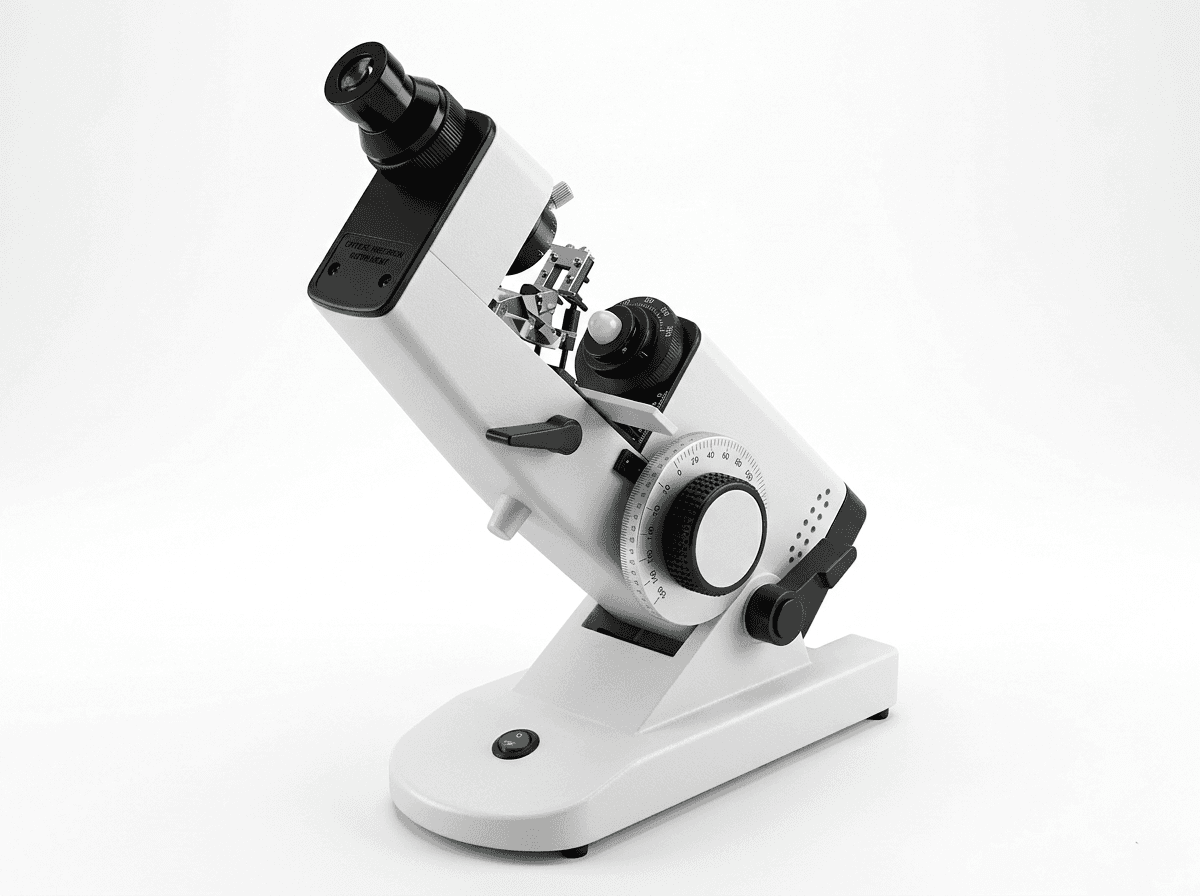
Manual Lensometer: Uses, Measurements & How to Choose the Right Lensometer
A manual lensometer is an optical measurement instrument used to determine the optical power and other characteristics of spectacle lenses. Depending on the instrument, it can help measure sphere, cylinder, cylinder axis, prism, and other lens parameters.
For optical centres, ophthalmic clinics, hospitals, laboratories, and healthcare distributors, a lensometer can be an important part of the lens measurement and verification workflow.
Unlike automated lensmeters, a manual lensometer requires the operator to position and focus the target through the lens and interpret the measurement using the instrument's optical scale. Understanding its operating principle, measurement range, and features is therefore important when selecting the right equipment.
Medsprings offers a Manual Lensometer designed for measuring and verifying spectacle lenses across a broad range of optical powers.
Explore the Medsprings Manual Lensometer for product specifications and enquiry information.
What Is a Manual Lensometer?
A manual lensometer, also known as a lens meter or focimeter, is an optical instrument used to determine the power and orientation of spectacle lenses.
The spectacle lens is positioned against the lens stop of the instrument. The operator then views the target through the eyepiece and adjusts the controls until the target is brought into focus.
Depending on the model, a manual lensometer can measure parameters such as:
- Sphere power
- Cylinder power
- Cylinder axis
- Prism
- Optical centre
- Lens marking position
Manual lensometers are commonly used where lenses need to be checked, verified, measured, or marked.
For facilities requiring a broader range of ophthalmic diagnostic equipment, Medsprings also provides Ophthalmic Equipment covering areas such as biometry, tonometry, corneal measurement, lens measurement, ocular examination, and vision and refraction.
How Does a Manual Lensometer Work?
A manual lensometer uses an optical system to determine the refractive characteristics of a spectacle lens.
The spectacle lens is positioned against the lens stop of the instrument. The operator looks through the eyepiece and adjusts the relevant controls until the target lines or focusing pattern are brought into focus.
The resulting readings allow the operator to determine the lens power.
For a spherical lens, the measurement is relatively straightforward because the optical power is consistent in different meridians.
A cylindrical lens has different powers in different meridians. The operator therefore needs to identify the relevant principal meridians and determine the cylinder power and axis.
Prism can also be evaluated using the appropriate markings and scale on the instrument.
The exact operating procedure varies between lensometer models, so operators should follow the equipment manufacturer's instructions and appropriate optical measurement procedures.
What Does a Lensometer Measure?
One of the main reasons lensometers are used in optical practice is their ability to provide several important lens measurements.
1. Sphere Power
Sphere power represents the spherical refractive component of a spectacle lens.
A manual lensometer can be used to determine the spherical power of a lens and identify whether the lens has positive or negative spherical power.
2. Cylinder Power
For lenses with astigmatic correction, the lensometer can help determine the cylindrical component.
The operator identifies the difference in power between the relevant principal meridians.
3. Cylinder Axis
The cylinder axis indicates the orientation of the cylindrical component of a prescription.
Manual lensometers provide an axis scale that allows the operator to determine the orientation of the cylinder.
4. Prism
Many lensometers also provide prism measurement capability.
Prism measurement can be useful when checking spectacle lenses that incorporate prism correction.
The measurement range depends on the specific lensometer.
5. Optical Centre
A lensometer can also be used to locate the optical centre of a spectacle lens.
This can be important when verifying lens positioning relative to the prescribed or intended fitting position.
6. Lens Marking
Manual lensometers can incorporate a marking unit that allows reference marks to be placed on the lens.
These marks can help with lens inspection, verification, alignment, and subsequent optical processing.
Manual Lensometer vs Automated Lensmeter
Manual and automated lensometers perform similar basic functions, but their operating methods are different.
| Feature | Manual Lensometer | Automated Lensmeter |
|---|---|---|
| Operation | Operator-controlled | Automated measurement |
| Lens positioning | Manual | Usually guided/automated |
| Reading | Optical scale/eyepiece | Digital display |
| Operator involvement | Higher | Lower |
| Power measurement | Yes | Yes |
| Cylinder measurement | Yes | Yes |
| Axis measurement | Yes | Yes |
| Prism measurement | Depending on model | Depending on model |
| Lens marking | Common | Model dependent |
| Power source | Often mechanical/optical | Electronic |
| Suitable for | Optical and ophthalmic workflows | High-throughput automated workflows |
Neither approach is automatically better for every facility.
A manual lensometer can be suitable where reliability, straightforward operation, operator control, and a traditional optical measurement workflow are priorities.
Automated lensmeters may be preferable where high-volume digital measurement and rapid automated readings are more important.
The right choice depends on the workflow, operator expertise, budget, and required measurement capabilities.
Applications of a Manual Lensometer
Manual lensometers can be used in several optical and ophthalmic environments.
Optical Shops
Optical professionals can use lensometers to verify spectacle lens power before dispensing.
This can help confirm that the finished lens corresponds with the intended prescription.
Ophthalmic Clinics
Eye-care facilities may use lensometers as part of spectacle verification and lens measurement workflows.
Optical Laboratories
Optical laboratories can use lensometers to inspect and verify lenses during processing.
Hospitals and Eye Centres
Hospitals and larger eye-care facilities may incorporate lens measurement equipment into their optical and refraction-related workflows.
Medical and Optical Distributors
Distributors supplying optical and ophthalmic equipment can consider manual lensometers as part of a broader equipment portfolio.
For international procurement, factors such as documentation, supply availability, packaging, shipping, and supplier support should be evaluated alongside technical specifications.
Key Measurements to Check When Buying a Manual Lensometer
When selecting a manual lensometer, the measurement range is one of the most important considerations.
Sphere Measurement Range
The sphere range determines the minimum and maximum lens powers that can be measured.
A wider range can make the instrument suitable for a broader variety of prescriptions.
The Medsprings Manual Lensometer provides a sphere measurement range of:
-25 D to +25 D
View the Medsprings Manual Lensometer specifications.
Cylinder Axis Range
The cylinder axis scale should provide the range required for routine spectacle lens measurements.
The Medsprings Manual Lensometer provides an axis range of:
0°–180°
This allows the operator to determine the orientation of cylindrical lens power.
Prism Measurement
If prism measurement is required, check both the standard prism range and whether the instrument includes a prism compensator.
The Medsprings model provides:
0–5Δ prism measurement
with measurement capability of up to:
20Δ with compensator
Lens Diameter
Lensometer compatibility with different lens sizes is another practical consideration.
The Medsprings Manual Lensometer supports lens diameters from:
16–90 mm
This provides flexibility when measuring different spectacle lens formats.
Lens Tilt
The instrument also provides an adjustable tilt range of:
0–90°
This allows the lens position to be adjusted according to the measurement requirement.
Medsprings Manual Lensometer
The Medsprings Manual Lensometer is designed for manual measurement and verification of spectacle lenses.
Its listed specifications include:
- Sphere: -25 D to +25 D
- Cylinder axis: 0°–180°
- Prism: 0–5Δ
- Prism with compensator: Up to 20Δ
- Lens diameter: 16–90 mm
- Lens tilt: 0–90°
- Adjustable eyepiece
- Marking unit
These specifications make it suitable for optical and ophthalmic environments where manual spectacle lens measurement is required.
For complete specifications, visit the Medsprings Manual Lensometer.
Why Is an Adjustable Eyepiece Useful?
An adjustable eyepiece can improve operator comfort and help accommodate differences in individual eyesight.
Because the measurement process requires the operator to view and focus through the instrument, proper eyepiece adjustment can be important for obtaining clear readings.
For facilities where multiple operators use the same instrument, an adjustable eyepiece can be a useful practical feature.
Why Is a Lens Marking Unit Important?
Lens marking can be useful when the optical centre or other reference positions need to be identified directly on the spectacle lens.
This can assist with:
- Lens verification
- Optical centre identification
- Alignment
- Reference marking
- Optical processing
The importance of marking functionality depends on the specific workflow of the clinic, optical shop, or laboratory.
Manual Lensometer for Optical Lens Verification
One of the most practical applications of a lensometer is spectacle lens verification.
After a spectacle lens has been manufactured or fitted into a frame, the lens power can be checked against the intended prescription.
A lensometer can help determine:
- Sphere
- Cylinder
- Axis
- Prism
- Optical centre
This makes it useful as a quality-control and verification tool within an optical workflow.
Manual Lensometer vs Lens Edger
A lensometer and lens edger perform completely different functions.
A lensometer measures the optical characteristics of a lens, while a lens edger shapes the lens so that it can be fitted into a spectacle frame.
In simple terms:
Lensometer → Measurement and verification
Lens Edger → Lens shaping and edging
Medsprings also offers a Manual Lens Edger for optical lens processing.
Together, lens measurement and lens processing equipment can form part of an optical workflow.
Manual Lensometer and Other Lens Measurement Equipment
A lensometer is one component of a broader lens measurement setup.
Depending on the facility, other equipment may include:
- Lens edgers
- Auto refractometers
- Keratometers
- Trial lens sets
- Vision charts
- Ophthalmic examination equipment
Explore Medsprings' Lens Measurements category for related equipment.
For a broader overview of equipment selection, see How to Choose Ophthalmic Equipment for an Eye Clinic.
You can also read Essential Ophthalmic Diagnostic Equipment for Modern Eye Care for an overview of commonly used ophthalmic diagnostic equipment.
How to Choose the Right Manual Lensometer
Before purchasing a manual lensometer, consider the following factors.
1. Required Measurement Range
Start by checking the sphere, cylinder, axis, and prism ranges.
The equipment should comfortably cover the prescriptions encountered in your facility.
2. Lens Diameter Compatibility
Check the supported lens diameter range, especially if the equipment will be used for different frame and lens types.
3. Prism Measurement
If prism verification is part of the workflow, check whether the instrument provides prism measurement and whether a compensator is included.
4. Optical Clarity
The viewing system and eyepiece are important because the operator needs to clearly observe and focus the measurement target.
5. Marking Function
A marking unit can be useful when optical centre and reference marking are required.
6. Operator Experience
Manual instruments require operator involvement.
Consider whether staff are familiar with manual lens measurement procedures and whether training is required.
7. Build and Mechanical Operation
A manual lensometer should provide stable mechanical adjustment and consistent operation.
For frequently used equipment, practical durability can be an important procurement consideration.
8. Supplier Support
For clinics and international distributors, consider the supplier's ability to provide:
- Product documentation
- Technical information
- Spare parts
- Shipping support
- Product availability
- Training information
- After-sales assistance
For international B2B procurement, these factors can be particularly important when selecting an ophthalmic equipment supplier.
Who Should Consider a Manual Lensometer?
A manual lensometer can be considered by:
Optical Shops
For routine spectacle lens verification and measurement.
Eye Clinics
For supporting spectacle and lens-related workflows.
Hospitals
For optical and ophthalmic departments requiring manual lens measurement.
Optical Laboratories
For lens verification and processing workflows.
Medical Equipment Distributors
For distributors looking to source ophthalmic and optical equipment for healthcare customers.
Medsprings works with healthcare organisations and international buyers looking for ophthalmic products and equipment. For product sourcing and enquiries, visit the Medsprings Contact page.
Frequently Asked Questions About Manual Lensometers
What is a manual lensometer?
A manual lensometer is an optical instrument used to measure spectacle lens power and characteristics such as sphere, cylinder, axis, and prism.
What is a lensometer used for?
A lensometer is primarily used to measure and verify spectacle lenses. It can help determine sphere power, cylinder power, cylinder axis, prism, and optical centre depending on the instrument.
Is a lensometer the same as a lens meter?
Yes. The terms lensometer, lens meter, and focimeter are commonly used to describe instruments used for measuring spectacle lens power.
What can a manual lensometer measure?
Depending on the model, a manual lensometer can measure sphere, cylinder, axis, prism, and optical centre, and may provide a lens marking function.
What is the difference between a manual lensometer and an automated lensmeter?
A manual lensometer requires the operator to focus and interpret the optical target using the instrument's controls and scales. An automated lensmeter performs the measurement electronically and displays the result digitally.
What is the sphere range of the Medsprings Manual Lensometer?
The Medsprings Manual Lensometer has a listed sphere measurement range of -25 D to +25 D.
What is the prism range of the Medsprings Manual Lensometer?
The listed prism range is 0–5Δ, with measurement capability up to 20Δ using the compensator.
What lens diameter can the Medsprings Manual Lensometer measure?
The listed compatible lens diameter range is 16–90 mm.
Does a manual lensometer measure cylinder axis?
Yes. The Medsprings Manual Lensometer has a cylinder axis range of 0°–180°.
What is the difference between a lensometer and a lens edger?
A lensometer measures the optical characteristics of a lens, while a lens edger shapes the lens so that it can be fitted into a spectacle frame.
Conclusion
A manual lensometer remains a useful instrument for spectacle lens measurement and verification in optical and ophthalmic workflows.
By measuring parameters such as sphere, cylinder, axis, and prism, a lensometer can help professionals verify lens characteristics and support optical processing and dispensing workflows.
When choosing a manual lensometer, consider the measurement ranges, prism capability, lens diameter compatibility, eyepiece adjustment, marking function, ease of operation, and supplier support.
For optical shops, ophthalmic clinics, hospitals, laboratories, and international distributors looking for manual lens measurement equipment, the Medsprings Manual Lensometer provides a broad measurement range with manual optical operation.
Explore the complete Medsprings Lens Measurement equipment portfolio or contact Medsprings for product and international supply enquiries.