


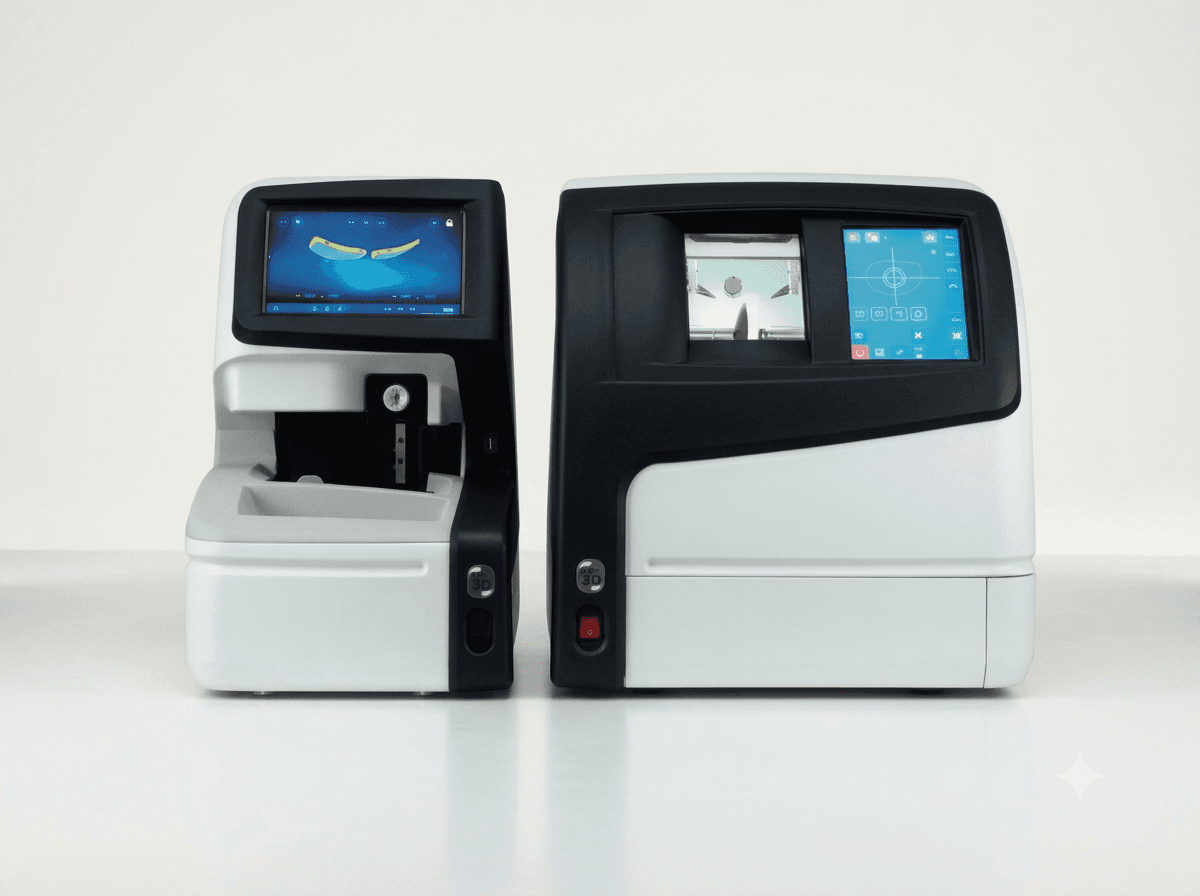
Lens Edger: Uses, Types, Features & How to Choose the Right Lens Edger
A lens edger is optical processing equipment used to shape spectacle lenses so they can be fitted into frames. Lens edging is an important part of the spectacle manufacturing and dispensing workflow because the lens needs to be shaped according to the dimensions and configuration of the selected frame.
Lens edgers are available in both manual and automated formats, and can be useful for optical shops, laboratories, eye-care facilities, and other environments where spectacle lenses need to be shaped and prepared for fitting.
When selecting a lens edger, optical professionals and procurement teams should consider whether a manual or automated system suits their workflow, along with the type of lenses being processed, edging requirements, ease of operation, compatibility, and supplier support.
Medsprings offers a Manual Lens Edger & Auto Lens Edger as part of its ophthalmic and optical equipment portfolio.
What Is a Lens Edger?
A lens edger is a machine used to shape the edges of spectacle lenses so that they can be fitted into a spectacle frame.
Spectacle lenses are initially produced in a larger, unfinished form. Before they can be installed into a frame, the lens generally needs to be processed to match the required frame shape and dimensions.
Depending on the type of edger, this process can be operator-controlled (manual) or computer-controlled (automated).
Depending on the equipment configuration and lens type, edging can involve processes such as:
- Lens preparation
- Lens shaping
- Edge grinding
- Bevel formation
- Grooving or other edge processing
- Final fitting preparation
The exact capabilities depend on the specific lens edger.
How Does a Lens Edger Work?
The basic purpose of a lens edger is to remove material from the lens until its edge profile matches the required shape.
The lens is positioned securely, and the edging process is then carried out either by the operator (manual edgers) or according to programmed settings (automated edgers), based on the required dimensions and frame configuration.
The process generally involves several stages.
1. Lens Measurement
Before edging, the required lens dimensions and optical parameters need to be established.
A Manual Lensometer can be used to measure and verify the optical characteristics of spectacle lenses, including parameters such as sphere, cylinder, axis, and prism depending on the instrument.
2. Lens Preparation
The lens is positioned and prepared for the edging operation.
Proper positioning is important because the final lens shape and optical alignment depend on accurate preparation.
3. Lens Edging
The edging wheel or processing mechanism removes material from the lens to achieve the required shape.
On a manual edger, the operator controls the process according to the machine's operating procedure. On an automated edger, the machine carries out the process based on programmed or scanned parameters, with less direct operator involvement.
4. Edge Finishing
Depending on the lens and frame, additional edge processing may be required.
The objective is to produce an edge profile appropriate for the intended frame.
5. Final Verification
After edging, the lens can be checked for dimensions, optical characteristics, and fit before being installed into the frame.
Why Is Lens Edging Important?
A spectacle lens cannot simply be placed into every frame without processing.
The lens needs to match the frame's shape and dimensions so that it can be properly positioned and secured.
Accurate lens edging can therefore contribute to:
- Proper frame fit
- Correct lens positioning
- Consistent lens appearance
- Efficient optical processing
- Reduced material wastage
- Final spectacle preparation
The exact processing requirements depend on the lens material, frame design, and edging method — whether manual or automated.
Applications of a Lens Edger
Lens edgers, manual or automated, can be used in several optical environments.
Optical Shops
Optical shops may use lens edging equipment to process lenses according to the selected spectacle frame.
This allows optical professionals to perform more of the lens preparation process within their own facility.
Optical Laboratories
Optical laboratories can use lens edging equipment as part of their spectacle lens processing workflow.
Eye Clinics
Eye-care facilities that provide optical services may use lens processing equipment alongside other optical instruments.
Hospitals and Eye Centres
Hospitals and larger eye-care facilities may require optical equipment for spectacle-related services and lens processing.
Optical Equipment Distributors
Medical and optical equipment distributors can include lens edgers within their product portfolio when supplying optical practices and healthcare organisations.
For international buyers, supplier support, documentation, product availability, and shipping arrangements can also be important procurement considerations.
Manual Lens Edger vs Automated Lens Edger
One of the first decisions when purchasing lens processing equipment is whether a manual or automated system is appropriate.
| Feature | Manual Lens Edger | Automated Lens Edger |
|---|---|---|
| Operation | Operator-controlled | Automated or computer-controlled |
| Operator involvement | Higher | Lower |
| Processing control | Manual | Programmed |
| Workflow | More hands-on | More automated |
| Setup | Generally straightforward | May require additional configuration |
| Suitable for | Smaller optical workflows | Higher-volume operations |
| Investment | Often lower | Often higher |
| Training | Operator skill important | Software/system training important |
The choice depends on the facility's workload, budget, staff expertise, and required level of automation.
A manual lens edger may be suitable for optical businesses that prefer direct operator control and a simpler processing workflow.
For high-volume facilities, an automated system may provide advantages through greater automation and workflow integration.
What Types of Lenses Can Be Processed?
Lens compatibility is an important factor when selecting an edger, whether manual or automated.
Depending on the specific machine and its configuration, lens edging equipment may be used with different spectacle lens materials and designs.
These can include:
- Single-vision lenses
- Bifocal lenses
- Progressive lenses
- High-index lenses
- Other spectacle lens types
However, compatibility should always be confirmed against the specific model and manufacturer's specifications.
Do not assume that every lens edger, manual or automated, is suitable for every lens material or design.
Key Features to Consider When Choosing a Lens Edger
Selecting the right lens edger requires more than comparing the machine's physical size or price — and more than deciding between manual and automated alone.
1. Lens Compatibility
First, determine which types of spectacle lenses the machine is designed to process.
Consider the lens materials, thicknesses, designs, and edge profiles required by your facility.
2. Edging Capability
Check what type of edging the machine supports.
Depending on the model, capabilities may include:
- Basic edging
- Bevel processing
- Grooving
- Finishing
- Other edge treatments
The required functionality depends on the frames and lenses commonly handled by the optical practice.
3. Operator Control vs Automation
Manual systems provide direct control over the edging process, which can be useful for experienced operators who prefer to manage the processing manually.
Automated systems reduce the level of hands-on operator control but can offer more consistent, programmed processing for facilities handling higher volumes.
4. Ease of Operation
An optical processing machine should be practical for everyday use.
Consider:
- Controls
- Adjustment mechanisms
- Accessibility
- Setup procedure
- Cleaning requirements
- Routine maintenance
5. Accuracy
The ability to achieve the required lens shape and dimensions is an important consideration.
When comparing equipment, review the manufacturer's stated specifications and consider how the machine fits into the facility's quality-control process.
6. Build Quality
A machine used regularly should be designed for the demands of its intended working environment.
Mechanical construction, processing components, and ease of maintenance can all influence the long-term practicality of the equipment.
7. Maintenance
Consider how easy it is to clean, maintain, and service the machine.
Regular maintenance can be important for keeping optical processing equipment operating consistently.
8. Supplier Support
For international and B2B procurement, supplier support is an important part of equipment selection.
Consider:
- Product documentation
- Technical information
- Installation guidance
- Training
- Spare parts
- Service support
- Product availability
- International shipping
A reliable ophthalmic equipment supply partner can simplify procurement, especially for distributors and healthcare organisations sourcing equipment across markets.
Lens Edger and Lensometer: How They Work Together
A lensometer and lens edger perform different functions, but they can form part of the same optical workflow.
The lensometer measures the optical characteristics of the lens, while the lens edger — manual or automated — shapes the lens for frame fitting.
A simplified workflow can look like this:
Lens measurement → Lens preparation → Edging → Edge finishing → Verification → Frame fitting
A Manual Lensometer can therefore complement a lens edger in an optical processing environment.
The lensometer can be used for lens verification, while the edger is used for physical lens processing.
Lensometer vs Lens Edger
It is important not to confuse these two instruments.
| Equipment | Primary Function |
|---|---|
| Lensometer | Measures and verifies lens optical characteristics |
| Lens Edger | Shapes and processes the lens edge |
| Keratometer | Measures corneal curvature |
| Auto Refractometer | Measures refractive error automatically |
| Lensometer + Edger | Can support complementary lens processing workflows |
Medsprings offers a range of Ophthalmic Equipment covering lens measurement, corneal measurement, biometry, tonometry, ocular examination, and vision and refraction.
Lens Edging in an Optical Workflow
A typical optical workflow can involve several different instruments.
For example:
Step 1: Prescription Assessment
The patient's refractive requirements are determined using appropriate examination and refraction procedures.
Step 2: Lens Selection
A suitable spectacle lens is selected according to the prescription and intended use.
Step 3: Lens Measurement
The lens can be measured or verified using a lensometer.
Explore the Medsprings Manual Lensometer.
Step 4: Lens Preparation
The lens is prepared according to the selected frame.
Step 5: Edging
The lens is shaped using the appropriate lens edging equipment, manual or automated.
Step 6: Final Verification
The finished lens can be checked before final fitting.
The exact workflow varies according to the optical facility, equipment, lens type, and professional procedures.
Medsprings Manual Lens Edger
Medsprings offers a Manual Lens Edger for optical lens processing applications.
The product forms part of Medsprings' wider ophthalmic equipment portfolio, including equipment for lens measurement and other diagnostic applications.
For current product information and specifications, visit the Medsprings Manual Lens Edger.
When evaluating the equipment for procurement, optical shops, eye clinics, laboratories, and distributors should consider their specific lens processing requirements — including whether a manual or automated system fits their workflow — and confirm compatibility with the intended workflow.
How to Choose the Right Lens Edger for an Optical Shop
For an optical shop, the right lens edger depends heavily on the type and volume of work performed.
For Low to Moderate Volume
A manual lens edger can be considered where:
- Processing volume is manageable
- Experienced operators are available
- Direct control is preferred
- Budget is an important consideration
- The facility does not require extensive automation
For High-Volume Processing
Facilities with high daily lens-processing volumes may need to evaluate automated edging systems.
Automation can potentially reduce operator involvement and improve workflow efficiency, depending on the system.
For Specialty Lenses
If the optical facility handles specialty lens designs, confirm that the selected edger — manual or automated — supports the required processing methods before purchase.
Lens Edger for International Procurement
For international buyers, choosing an optical equipment supplier involves more than evaluating product specifications.
Hospitals, clinics, distributors, and procurement teams may also need to consider:
- Export documentation
- Product availability
- Packaging
- Shipping arrangements
- Technical documentation
- Spare parts
- After-sales support
- Communication and response time
- Long-term supply requirements
Medsprings operates as an India-based ophthalmic brand and international supply partner, supporting healthcare organisations and buyers looking for ophthalmic products and equipment.
For international sourcing enquiries, visit the Medsprings Contact page.
Other Ophthalmic Equipment From Medsprings
A lens edger can be part of a wider ophthalmic equipment setup.
Depending on the requirements of the facility, other equipment may include:
- Manual lensometers
- Manual keratometers
- Pachymeters
- Corneal topographers
- Auto refractometers
- Biometers
- Tonometry equipment
- Vision testing equipment
- Ophthalmic examination equipment
Explore the complete Medsprings Ophthalmic Equipment portfolio.
For lens-related equipment, visit the Lens Measurements category.
You can also read:
- Manual Lensometer: Uses, Measurements & How to Choose the Right Lensometer
- How to Choose Ophthalmic Equipment for an Eye Clinic
- Essential Ophthalmic Diagnostic Equipment for Modern Eye Care
How to Choose a Lens Edger: Quick Checklist
Before purchasing a lens edger, review the following:
- Do you need a manual or automated system?
- What lens materials can it process?
- What lens designs are supported?
- What edging functions are available?
- Does it support the required edge profiles?
- Is the operation suitable for your staff?
- Is the machine appropriate for your daily workload?
- How easy is routine maintenance?
- What documentation is provided?
- Are spare parts available?
- What technical support is available?
- Can the supplier support international shipping and procurement?
Answering these questions can help optical businesses and procurement teams narrow down the right equipment for their requirements.
Frequently Asked Questions About Lens Edgers
What is a lens edger?
A lens edger is an optical processing machine used to shape spectacle lenses so they can be fitted into frames. It can be manual (operator-controlled) or automated (computer-controlled).
What is a lens edger used for?
A lens edger is used to remove and process material from the edges of spectacle lenses so that the lens can match the required frame shape and edge profile.
What is the difference between a manual and automated lens edger?
A manual lens edger relies on the operator to control the edging process directly, while an automated lens edger uses programmed or computer-controlled processing with less operator involvement.
What is the difference between a lensometer and a lens edger?
A lensometer measures and verifies the optical characteristics of a spectacle lens, while a lens edger shapes and processes the physical edge of the lens.
Can a lens edger process spectacle lenses?
Yes, lens edgers are designed for spectacle lens processing, but the exact lens materials and designs supported depend on the specific equipment model and whether it is manual or automated.
Is a manual lens edger better than an automated lens edger?
Not necessarily. A manual lens edger may be appropriate for facilities that prefer direct operator control and have manageable processing volumes. Automated systems may be more suitable for higher-volume workflows requiring greater automation.
What should I consider when buying a lens edger?
Important considerations include whether to choose manual or automated, lens compatibility, edging capabilities, operator control, accuracy, build quality, maintenance requirements, ease of operation, and supplier support.
Can a lens edger be used with a lensometer?
Yes. The two instruments perform different functions and can complement each other in an optical workflow. A lensometer can be used for lens measurement and verification, while the lens edger is used for lens processing.
Who uses lens edging machines?
Lens edging equipment can be used by optical shops, optical laboratories, eye-care facilities, hospitals, and other organisations involved in spectacle lens processing.
Why is lens edging important?
Lens edging allows a spectacle lens to be shaped according to the required frame dimensions and edge profile, helping prepare it for fitting into the selected frame.
Where can I source a lens edger?
Lens edgers can be sourced from ophthalmic and optical equipment suppliers. Medsprings provides a Manual Lens Edger as part of its ophthalmic equipment portfolio.
Conclusion
A lens edger is an important piece of optical processing equipment used to shape spectacle lenses for frame fitting, whether through a manual, operator-controlled system or an automated, computer-controlled one.
Understanding the difference between lens measurement and lens processing — and between manual and automated edging — is essential when building an optical workflow. A lensometer can help measure and verify lens characteristics, while a lens edger performs the physical shaping and edge processing required for fitting.
When selecting a lens edger, optical shops, laboratories, hospitals, clinics, and distributors should consider manual vs automated operation, lens compatibility, edging capabilities, operator control, accuracy, maintenance, workflow requirements, and supplier support.
Medsprings provides a Manual Lens Edger alongside a broader range of Ophthalmic Equipment for healthcare organisations and international buyers.
For product specifications, sourcing information, or international enquiries, contact Medsprings.