


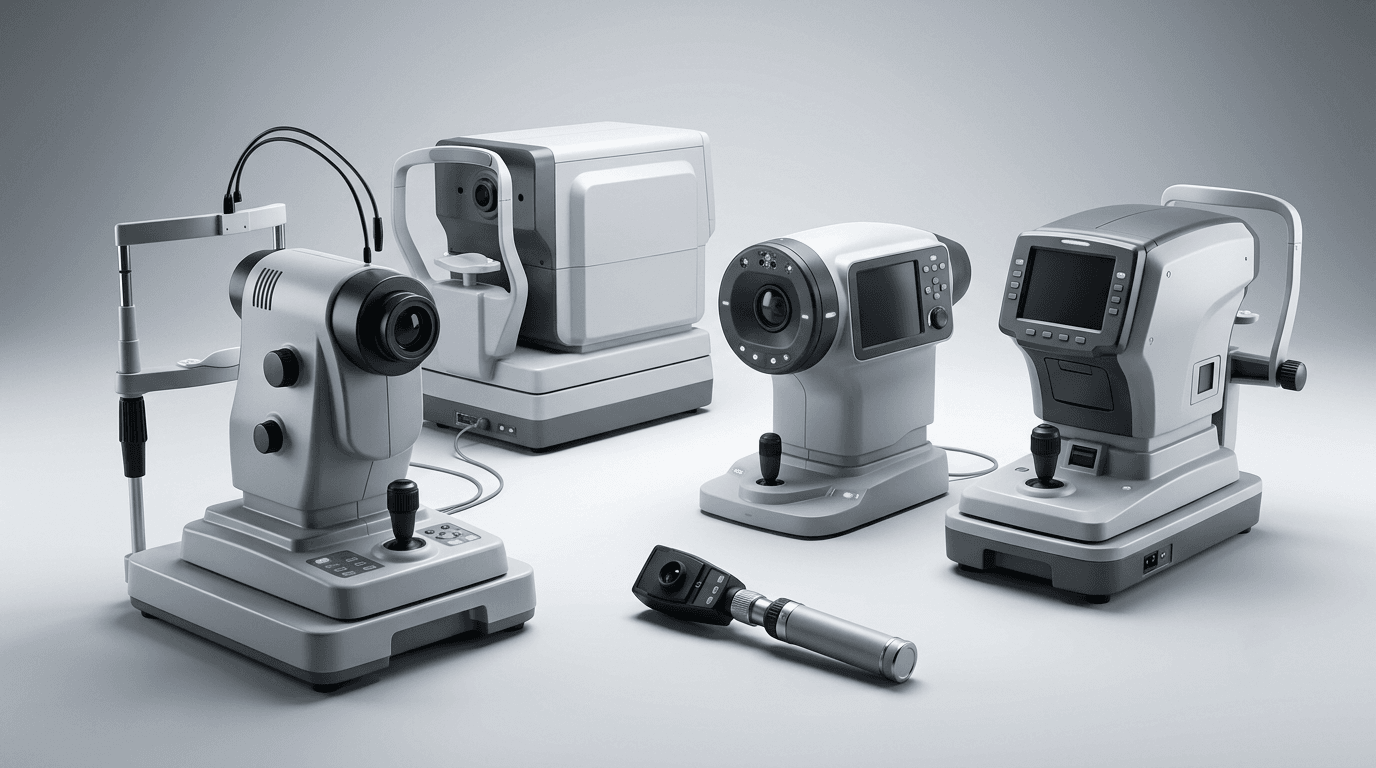
Essential Ophthalmic Diagnostic Equipment for Modern Eye Care
Modern ophthalmology depends on accurate examination, measurement, and diagnostic tools at different stages of patient care. From routine eye examinations to cataract planning, refractive assessment, posterior-segment evaluation, and optical verification, different clinical applications require different types of ophthalmic diagnostic equipment.
For hospitals, ophthalmology clinics, diagnostic centres, optical laboratories, distributors, and healthcare procurement teams, understanding the role of each equipment category can make product selection easier.
Medsprings provides a specialised portfolio of ophthalmic equipment and diagnostic solutions, covering ocular examination, biometry, tonometry, corneal measurement, lens measurement, vision and refraction, and related ophthalmic clinical requirements.
What Is Ophthalmic Diagnostic Equipment?
Ophthalmic diagnostic equipment consists of specialised instruments used to examine the eye, measure ocular structures and functions, assess vision, and support clinical decision-making.
Different instruments are designed for different purposes. A slit lamp, for example, provides detailed magnified examination of the eye, while a biometer is used for ocular measurements relevant to surgical planning.
A comprehensive eye-care environment may therefore require several complementary categories of diagnostic instruments.
1. Slit Lamps for Detailed Eye Examination
A slit lamp is one of the key instruments used in ophthalmic examination.
Medsprings' Ocular Examination portfolio includes desktop slit lamps as well as portable slit lamp solutions.
Slit lamps can support detailed examination of the anterior segment, while appropriate illumination and magnification allow clinicians to observe ocular structures during examination.
Portable slit lamps can also provide greater flexibility for practices where examinations need to be performed in different clinical environments.
2. Ophthalmoscopes for Posterior Segment Examination
Ophthalmoscopes are another important component of an ophthalmic diagnostic equipment portfolio.
Medsprings offers Direct Ophthalmoscopes and Binocular Indirect Ophthalmoscopes within its ocular examination category.
Direct ophthalmoscopes provide a handheld approach to high-magnification observation of the posterior segment, while binocular indirect systems can provide wider-field stereoscopic views.
The appropriate instrument depends on the clinical application, examination workflow, and requirements of the eye-care professional.
3. Biometry Equipment for Surgical Planning
Ophthalmic biometry equipment is particularly relevant to preoperative assessment and intraocular lens power calculations.
Medsprings' Biometry category includes:
-
A-Scan Biometers
-
A/B Scan Ophthalmic Ultrasound Workstations
A-Scan systems can measure anatomical dimensions such as axial length and anterior chamber depth. Combined A/B Scan systems add B-scan ultrasound imaging capabilities for posterior-segment evaluation.
For cataract and ophthalmic surgical centres, biometry can therefore form an important part of the diagnostic and planning workflow.
4. Tonometry Equipment for IOP Measurement
Tonometry equipment is used to measure intraocular pressure.
Medsprings' ophthalmic equipment portfolio includes different tonometry solutions, including applanation, Schiotz, non-contact, and handheld/rebound approaches.
When selecting a tonometer, healthcare professionals and procurement teams should consider the intended clinical environment, workflow, patient requirements, and measurement method.
5. Keratometers and Corneal Measurement Equipment
Corneal measurement plays an important role in several areas of ophthalmic assessment.
Keratometry equipment can be used to evaluate corneal curvature, while related diagnostic technologies can provide additional information for specific clinical and optical applications.
Medsprings' broader ophthalmic equipment portfolio includes Auto and Manual Keratometers, Corneal Topographers, and Pachymeters, supporting different corneal measurement requirements.
6. Lensometers for Lens Verification
Lens measurement equipment is especially relevant to optical practices and lens-finishing environments.
Medsprings' Lens Measurements portfolio includes Manual and Auto Lensometers as well as Manual and Auto Lens Edgers.
A lensometer can be used to verify characteristics such as sphere, cylinder, axis, and prism power, while automated lensometers can streamline measurement and verification workflows.
Lens edgers, meanwhile, are designed for lens shaping, finishing, and frame-fitting applications.
7. Vision and Refraction Equipment
Vision and refraction equipment supports the assessment of refractive errors and visual performance.
The Medsprings ophthalmic equipment portfolio includes products such as:
-
Digital Vision Charts
-
Streak Retinoscopes
-
Autorefractometers
-
Trial Lens Sets
These tools can support routine vision assessment and refraction workflows within ophthalmic practices.
8. Ophthalmic Equipment for Different Clinical Environments
Not every healthcare facility requires the same equipment configuration.
Eye Clinics
Routine ophthalmic practices may prioritise slit lamps, ophthalmoscopes, tonometers, refraction equipment, and other examination instruments.
Cataract and Surgical Centres
Facilities involved in surgical planning may place greater emphasis on biometry and other diagnostic equipment alongside their surgical product requirements.
Optical Laboratories
Lensometers and lens edgers can be particularly relevant to lens verification and finishing workflows.
Hospitals
Hospitals may require a broader range of diagnostic and ophthalmic equipment to support multiple departments, specialists, and patient-care pathways.
Understanding the environment helps procurement teams build an equipment portfolio around actual clinical requirements.
What Should You Consider When Buying Ophthalmic Diagnostic Equipment?
When evaluating ophthalmic diagnostic equipment, healthcare organisations should consider more than individual specifications.
Clinical Application
Identify the exact examination, measurement, or diagnostic task the instrument needs to perform.
Workflow
Consider how the equipment will fit into the existing clinical workflow and whether it is intended for routine or specialised use.
Product Range
A supplier with multiple ophthalmic equipment categories can make it easier to source complementary products.
Technical Information
Clear product specifications and application information are important when comparing equipment.
Supply and Support
Hospitals, clinics, distributors, and importers should also consider procurement communication, international supply coordination, documentation, and ongoing support.
Medsprings Ophthalmic Equipment Portfolio
Medsprings brings together a broad range of ophthalmic diagnostic equipment and related eye-care instruments through its dedicated Ophthalmic Equipment category.
The portfolio currently covers:
Together, these categories support diagnostic, measurement, examination, optical, and clinical-environment requirements across different ophthalmic settings.
A Broader Ophthalmic Supply Partner
Ophthalmic equipment is one part of the wider Medsprings portfolio.
Healthcare organisations and distribution partners can also explore Ophthalmic Viscosurgical Devices, Ophthalmic Knives, and Surgical Instruments & Consumables.
This broader product structure allows Medsprings to serve as a focused ophthalmic supply partner and solution provider, supporting hospitals, clinics, distributors, importers, and healthcare procurement professionals across international markets.
Making Ophthalmic Equipment Procurement More Focused
Choosing diagnostic equipment becomes easier when the procurement process begins with the clinical requirement rather than a generic equipment list.
Whether the requirement involves biometry, tonometry, ocular examination, corneal measurement, lens measurement, refraction, or optical diagnostics, selecting the appropriate equipment category is the first step toward building an effective clinical setup.
Medsprings provides a focused portfolio of ophthalmic equipment and diagnostic solutions to help healthcare organisations, distributors, and procurement teams explore products according to their requirements.
Explore Ophthalmic Equipment or contact Medsprings to discuss product and supply requirements.